Issued 13th of March 2026
Because I've had such a crazy career, by choice, where I have not only worked across most industries and for almost a dozen companies, but also lived in many different places, I often forget how hard it can be to make the jump from one industry to another.
During my conversations with meteorologists trying to find either their first or second job or transition to another sector, I see a lot of unrealized potential and a need for continued learning after college. COMET modules are great, but they don't go far enough.
When I was younger, in my second job at United Airlines, I was a little bit cocky and sure of myself. I once called out one of the NWS offices for what to this day was in fact a terrible amended TAF, but how I went about letting them know wasn't, to this day, a great way to do so.
Another time, I reached out to UCAR because I wanted them to make a COMET course about elevated convection and the 700mb shortwave. This is basically a situation that can precede the actual lee-side low along the Colorado/New Mexico/Wyoming front range by about 24 hours, and can lead to unexpected convection around Denver, but also in the western High Plains. COMET or UCAR said no. The thing is, while this was an aviation issue for me at the time, it is also a big deal for wind power forecasting in energy trading and can be a risk for road weather via dry and wet microbursts.
While they may not see the need, these are the kind of things meteorologists are trying to predict on a regular basis. However, this is not something most universities are going to cover unless it is their area. This leads to a large number of forecasters who can't forecast specific types of weather.
One more side story. The craziest thing about working in Newfoundland wasn't the weather. It was that most of the meteorologists from Newfoundland had never heard thunder. I remember a colleague recounting a story where they were visiting Iowa for a non-work event, and as you can guess, they heard thunder for the first time, as an adult.
Getting a degree is hard work, and many people give up, often due to the ridiculous level of math. However, the reward for that hard work shouldn't be that you are siloed from most jobs because you can only forecast lake effect snow, or you can forecast tornadoes and severe weather amazingly, but then you learn that not all clients care about severe weather.
This is what My Met Job hopes to change.
The Jobs
US-based Jobs
Industry: Internship
Title: Intern - Meteorological Operations (Summer & Fall 2026)
Company: AEM (Weatherbug)
Work Location: Remote
Pay: $16-$18.50/hour
Benefits: None
Time Period:
- Full Time Summer 2026 (apx. May 27 - Aug 31), continuing part-time through May 2027
- Full-time: 35-40 hours/week, Part-time: 15-20 hours/week
Degree & Experience:
- Preferably Senior level credit status with some forecast analysis experience.
- Must be eligible to work in the U.S. without company sponsorship, now or in the future, for employment-based work authorization.
Job Responsibilities:
- Write weather stories for WeatherBug – detailing forecast outlooks and significant weather events
- Produce social media content for Facebook and Twitter related to weather events, weather safety, etc.
- Perform forecast analysis to support various clients
- Draft forecasts for clients
- Perform data quality review of weather data content and systems
Who Should Apply?
All aspiring operational meteorologists who want to be a forecaster after graduating. Much of what you do will require analyzing weather information to turn into stories and social media posts.
Industry: Operational Meteorology
Title: Meteorologist (Applied Scientist I)
Company: Unknown (Search Wizards is a hiring company)
Work Location: Goodyear, Arizona (Phoenix)
Pay: $43-48 USD / hour
Benefits: See Job Listing
Time Period: 12-month contract
Degree:
- Bachelor’s degree in Meteorology, Atmospheric Science, or related field
Years of Experience: 1-3 years of experience in operational meteorology
Skills:
-
- Proven weather forecasting experience in an operational environment
- Experience using Geographic Information Systems (GIS) such as ESRI, QGIS, or Google Earth
- Strong analytical skills with attention to detail in interpreting meteorological data
- Experience with satellite, radar, and numerical weather prediction models
- Experience conducting forecast verification and quality control analysis
- Ability to independently prepare and deliver briefings to large virtual audiences (25–100+ people)
Who Should Apply?
This is pretty much an early-career job for the right person. You do need at least 1 year, but you may be able to use an internship if you were doing operational forecasting. The job is a great way to start, where you are working with clients, using GIS, and doing basic forecasting. I would tell anyone who is trying to get a break to apply.
About the Location
Phoenix from May to September is unbelievably hot. There is no way around this. If you like to be outside, you will end up doing this after dark. Now, the rest of the year, I love visiting Phoenix, and of course, it's more because I enjoy being outdoors. Phoenix has some of the best city hiking of any big city, with mountains within the city covered in cactus instead of trees. Piestewa Peak is a great hike to test how good of shape you are really in, with 1,300 feet of elevation gain over a short distance. Great views at the top. I've taken some of the best sunset photos from Phoenix. One of the hardest hikes I've done is in the Phoenix area. There is also Saguaro National Park nearby in Tucson, which is a pretty cool forest of cactus. There are several interesting towns where you can take a day trip, there are waterfalls and river tubing if you know where to look, and then just a short drive north is Sedona, one of the best places in the US just for the scenery, and a little further north of there is Humphrey's Peak (highest in the state and where you can go snow skiing ) and next to the Grand Canyon.
Industry: Energy Trading (non-forecasting)
Title: Senior Manager Power Operations & Marketing
Company: City of Seattle, Washington
Work Location: Seattle, Washington
Pay: $78 - $125USD/hour
Benefits: See Job Listing
Degree:
- Advanced degree in Finance, Economics or Business Admin (I think if you have a meteorology degree and a MBA or experience, you should apply)
Years of Experience: 6 years of experience in Power Marketing and Operations or related Energy operations, 3 years in supervisory role)
Skills:
- Understanding of market and operational analytics tools and methodologies, with experience applying them to merchant energy activities
- Expertise with data and analytics tools and technologies.
- Knowledge of organized market concepts and market operations. Preference for demonstrated experience with Imbalance and/or Day-Ahead markets, or working and trading in an RTO or ISO, is highly desirable.
- Knowledge of power contracts structuring and applicability to utility power portfolio. Direct experience with the Bonneville Power Administration and familiarity with BPA’s power and transmission contracts and operations.
- Ability to work with both public and private entities in a consultative and sound manner that secures the Utility’s interests.
- Demonstrated vision, leadership capabilities, sound judgment, and strong consensus-building and negotiating skills.
- Excellent oral and written communication and interpersonal skills
- Understanding of power marketing operations with a diverse portfolio of energy resource types, and experience in optimizing value through effective integration, coordination, and operations.
- Knowledge of existing and emerging federal, regional, and local regulations, and energy and greenhouse gas compliance markets necessary to develop strategic insights to support City Light’s objectives and customer needs.
- Understanding of generation operations, including but not limited to hydro system and watershed operations, as well as operations and integration of renewable generation, storage resources, and other relevant elements of current and future portfolios for City Light.
Who Should Apply?
This is not a meteorology role. I posted this because someone with an energy markets background, and either an MBA or another advanced financial or energy background, could apply. Power markets are driven in part by the weather. The listing says this, and I know from working in power markets that it's true.
This is a job for someone with a very specific skillset, but also allows those who are not qualified, but who want to work in energy, you may be able to imagine positions that are not obviously related to weather, but that offer a career option. This is a hydro power-specific type of opportunity.
About the Location
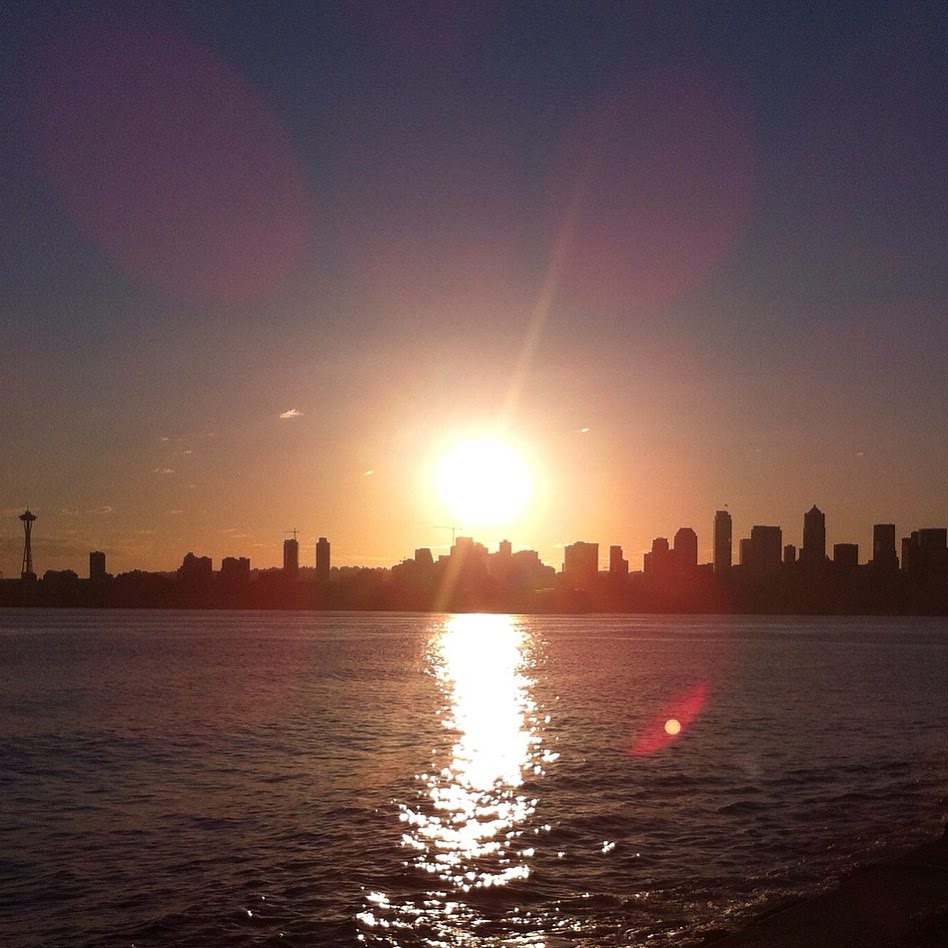
Seattle is awesome, and Washington is one of my favorite states in the US. Mountains, lakes, waterfalls, snow, the ocean, a rainforest, almost a desert, and red rock. When I was working in Seattle, I used to go hiking every day on my way to work on the night shift. In the morning, I would get out of work around 5 am, and on the weekends, I would drive to a point called West Seattle that stuck out west of downtown into the bay, and I would watch the sun rise.
Industry: Emergency Management
Title: Meteorologist
Company: Pantex
Work Location: Amarillo, Texas
Pay: None given
Benefits: See Job Listing
Degree & Experience:
- Bachelor's degree: Minimum 4 years of relevant experience. Typical experience ranging from 7 to 10 years.
- Master's degree: Minimum 3 years of relevant experience.
- PhD.
- OR applicants without a bachelor's degree may be considered based on a combination of at least 12 years of completed education and/or relevant experience
Skills:
- Should be able to decode, plot, and record data related to the physical characteristics of the atmosphere. This involves developing charts, diagrams, cross sections, and other analytical presentations.
- Must have specialized experience, including an understanding of the measurement of atmospheric phenomena using in situ and remote scientific equipment and instrumentation.
- Should have a working background in electrical equipment and electronic hardware, and can perform the field work to install, maintain, and calibrate meteorological instruments and/or perform data quality assurance and instrument quality control.
- The position requires the ability to provide frequent communication and interactions with a variety of customers, both internal and external.
- Must present information clearly and effectively through oral and written words.
Who Should Apply?
You should read the job listing. You should know up front that you are responsible for the safety of the people at this facility and the surrounding areas. Even if you are protected from any accountability, your job in this role is to model any unhealthy or dangerous chemicals that leak. You would use plume modeling. You also forecast for severe weather, lightning, or any other damaging weather concerns and then relay this information to a variety of audiences. You should enjoy having big responsibilities.
About the Location
As someone who has seemingly lived everywhere, I have lived really close to Amarillo in my life. This is for the person who doesn't want to live in a big city, doesn't mind a dry climate, but really loves the idea of chasing tornadoes, getting very strong winds, blizzards, and dust storms, and likes to watch cows graze. This is the place where I decided I wanted to be a meteorologist after watching a tornado hit the town I lived in.
That being said, Amarillo is a small town in the Texas Panhandle, about 3 hours drive from Santa Fe, New Mexico, so pretty close to actual mountains, and about a 3-4 hour drive to Oklahoma City, and maybe a 6-hour drive to Denver, Colorado. Amarillo has an old amusement park called Wonderland that I used to visit when I was younger. There is also Palo Duro Canyon, about 1 hour south, which is the second-largest canyon in the US after the Grand Canyon. Also, if you like football, the Texas Panhandle and West Texas are where Friday Night Lights originated.
International Jobs (Outside the US)
Industry: Energy
Title: Meteorologist
Company: BP
Work Location: Singapore
Pay: None given
Benefits: See Job Listing
Degree:
- Bachelor’s degree in Meteorology, Atmospheric Science, or related field
Years of Experience: Experience, but none listed
Skills:
- Deep curiosity about the weather and knowledge of global weather patterns and drivers
- Skill in using global weather models and knowledge of limitations.
- Experience in East Asian and Australian weather forecasting.
- Knowledge, with experience of East Asian and Australian power, LNG, and agricultural markets specifically.
- Knowledgeable about other energy commodity markets, such as carbon and oil, and the impact the weather can have on these.
- Commercial focus and reputation for commercial delivery.
- Experience working within the energy markets.
- Proficient with Python programming
- Experience with packages and libraries related to weather forecasting is a plus
- Machine learning, especially if applied to weather forecasting
- In-depth knowledge of forecast verification methods
Who Should Apply?
You want to live in a tropical location, almost on the Equator, between Asia and Australia, and really close to the trendy Bali. The job itself is an energy trading role that requires experience, but not a number, so if you have it, you should apply. You should have the ability to forecast in Asia or Australia, which, if you have never forecasted for the southern hemisphere, you should try that first before applying. The job also asks for you to have Python skills, and this is because you will interact with quantitative mets to build internal tools. If you have skills like this and you might want to live in this part of the world, or already do, then you should apply. This is a good job in hard to hire for location. This job was open a few months ago, so either they are hiring a second position or never filled the first.
Industry: Energy Trading
Title: Meteorologist/Electricity Demand Forecaster
Company: Wood Mackenzie
Work Location: Edinburgh, Scotland
Pay: None given
Benefits: See Job Listing
Degree:
- Bachelor’s degree in Meteorology, Atmospheric Science, or related field
Years of Experience: Experience, but none listed
Skills:
-
Experience in Operational Meteorology preferred but not required. (This is why you should apply.)
- Interest in electricity markets and renewables a plus. (This should say required.)
-
Very strong Excel skills are required. Familiarity with Pivot Tables, VLOOKUP, etc.
-
Knowledge of North American geography required.
-
Be able to handle pressure, make tough calls, and take bold stances and risks when warranted. This is, to me, the main requirement. You make a forecast, even if you are different from every model or vendor, you must make the forecast and stand by it.
Who Should Apply?
If you want to work in energy, this is the golden ticket. The job title is misleading because they really want a meteorologist to work on a trading floor. The skills you need are what most meteorologists already have. As long as you can use Excel and know some Python, and are willing to live in Scotland this could be for you.
Other Jobs Worth Mentioning
Strategic Assistant to the Head of Meteorology - Ubimet Group - A unique position at a well-established company based in Austria. Link to Job Post
Senior Forecaster - CGS hiring firm - You have to be based in the Netherlands to take this role. Really good benefits. This is a repost. Link to Job Post
Final Thoughts
As much as I want to talk about the current AI situation and the jobs being posted, I feel like it's probably safer to let that one go. Just make sure you understand who is hiring you and for what reason, and if you are early in your career, how it will help or hurt your future.
I mentioned above about unrealized potential. This is such an unfortunate part of the state of meteorology that someone with skills that could easily translate from one industry to another doesn't realize what they have.
As meteorologists reach out to talk to me and as I sign up other meteorologists for private coaching, the one thing that sticks out is that maybe too many of you are focusing exactly on what the job is asking for instead of using what you already have to make a case why you are qualified for the role.
If you really understand the boundary layer or the surface to about 925mb roughly, you can pretty much go to any meteorology job. If you have a strong knowledge base in temperature inversions and low-level wind flow, you have the keys to aviation, marine, road weather, event forecasting (sports or concerts), and energy.
My background includes barely graduating from college with a low GPA, thinking I wasn't good enough for any job, then learning that most companies couldn't care less about GPA. I graduated from a university that almost lost accreditation while I was enrolled. It took me 2 years of applying, being flown into job interviews (before Covid, they did this), and then not getting the job, working as a taxi driver (pre-Uber), at a liquor store, at an Arby's, as an air pollution tester, and at a large electronics store, before getting my first meteorology job. I was about the least confident forecaster. And yet, I've been forecasting for 20+ years, all across America and worldwide, for a whole list of businesses, foreign dignitaries, and celebrities.
Good luck with your job search!


Responses