Issued on the 12th of June, 2026 -
Have you ever been speaking to someone or listening to another person speak, and they start to go off on a tangent? Especially one that you are not really that interested in hearing, and so your own mind starts to wander, and in the worst situations, you take a power nap with your eyes open.
While everyone likely does this in everyday conversations, this is exactly what you should avoid doing in an interview.
However, it is so easy to go off in the wrong direction when you are so eager to share everything you know and why you would be the best candidate. In doing this, you likely don't even address the right answers the interviewer needs to hear.
How do you prevent The Ramble?
As an experiment, answer the simple question, "Tell Me About Yourself". Answer this question without any guidelines or rules, record it on your phone, and then play it back and review what you said.
Many people, when answering this question, which is often the first question in the interview, can't help themselves and will go on for 5+ minutes.
You should be able to answer this question in 2 minutes or less and connect your answer to the role.
- Review the job description.
- Review your resume and your background.
- Now connect your experiences to the job.
- What are the strongest connections between your experience and the job requirements? Use these first.
- Now, what are the second and third best ways in which your background meets the duties of the job?
- Don't worry about chronological order. Just take what you know, or what you could have learned in a job, and apply that to your answer.
- Don't stretch the truth and outright lie. It will catch up to you, and you don't want to get fired, while burning a bridge, and making it hard to land the next role.
If I were interviewing for an energy role, I would typically start with my experience at an energy company, even if it is not chronologically the first job or my current role. I could then use my current role in commodities, but that also includes natural gas forecasting, to further support my energy qualifications.
Areas where I can stretch my knowledge are around AI and working with Python, but not an expert. I have a lot of knowledge in coding syntax, but not Python explicitly, and for some companies, that has been enough, and for others, it wasn't. This has both worked and failed in past interviews, but it just depends on what the company values, and if Python is the most important thing, then my resume would go right into the garbage.
However, say I was instead interviewing for a wildfire role, for which I have interviewed for four jobs and have received two offers, which I had to turn down. I do not have any direct wildfire experience. What I do have is, I would say, an expert level knowledge of mountain meteorology, which 3 of the 4 jobs were based in the mountains. The other one was based in Texas, where I not only lived for a big part of my life, but where I focused on for my role in energy. I was able to connect with enough points about being a wildfire meteorologist to get the next interview and eventually an offer.
Look, I rambled a bit and got off topic. See, it's easy to do.
The main thing is, don't pull a Chunk from Goonies when you are asked to tell your story.
Remember that most jobs are asking you to be an effective communicator, and when you are in an interview, the answer to the question is not necessarily the only thing you are being graded on.
You should answer all questions in an interview like you would when speaking with a customer or client.
More about this next week.
Only a few jobs this week.
The Jobs
USA Jobs
Industry: Air Quality
Title: Air Quality Program Specialist
Company: State of Pennsylvania - DEP
Work Location: Harrisburg, PA (state capital)
Pay: $67,000 - $103,000 USD per year
Benefits: See Job Listing
Closing Date: 22nd of June, 2026.
Degree:
- Bachelor's degree in Biology, Chemistry, Physics, Engineering, or an environmental field closely related to Air Quality Management
Years of Experience:
- Bachelor's Degree + 3 years or 1 to 2 years of previous experience at specific levels.
Key Skills or Knowledge: (You should be able to do these duties)
- Daily Forecasting: Prepare air quality forecasts and declare action days when pollution levels may exceed standards
- Trend Analysis: Analyze monitored and forecasted data to identify exceedances and improve forecasting accuracy
- Program Development: Maintain forecasting tools and ensure information on public platforms is accurate and up to date
- Agency Coordination: Work with federal, state, and local partners to share data and support forecasting efforts
- Technical Writing: Develop reports, guidance documents, and communications related to air quality forecasting
- Data Management: Enter required information into electronic systems while ensuring accuracy and completeness
Who Should Apply?
Air quality is one of the more available jobs for meteorologists, but it is definitely different in that it involves more chemistry and biology-related types of work in some cases, as this job may. However, as a meteorologist, your knowledge of inversions and boundary layer meteorology can be a significant asset.
You should apply if you need a job, already have some experience, and have some interest in working in this field. The pay is reasonable for the location.
About the Location
Not quite in the middle of Pennsylvania, on the banks of the massive Susquehanna River, sits the capital of Pennsylvania, Harrisburg. Not a big city, but there are a few good restaurants, they do get decent concerts, and a lot of outdoor recreation in the city and nearby in the mountains. However, this is not a big city at all. It is about 2 hours driving from Philadelphia, 3 hours from Washington D.C., 4 hours from Pittsburgh, and New York City. The train runs through Harrisburg, but don't fool yourself into thinking this train is anything like Europe's trains. I've been a few times.
International Jobs (Outside the US)
Industry: Operational
Title: Meteorologist
Company: National Environmental Agency
Work Location: Singapore
Pay: None Listed
Benefits: See Job Listing
Degree:
- Bachelor's or Master's degree in Physics, Mathematics, Engineering, Meteorology, Atmospheric Sciences, Remote Sensing, or Geoscience.
Years of Experience:
- None specifically stated, but you should have experience in remote sensing.
Key Skills or Knowledge: (most important to the company)
- Good command of spoken and written English and excellent communication skills
- Good knowledge in Information Technology, with working experience in scientific programming and development of applications (preferable)
- Experience in working with remote sensing data, as well as knowledge in statistical packages or machine learning/deep learning algorithms (preferable).
- Able to perform shift work, including on weekends and public holidays.
Duties You Should Be Able to Perform (for a lack of qualifications)
- Operational forecasting (on shift work)
- Analysing data from computer weather prediction models and meteorological observation systems such as Doppler weather radar, satellite systems, and wind profilers.
- Conducting studies to advance our understanding and prediction capabilities in tropical weather and climate.
- Analysing geospatial data from computer weather prediction models and meteorological observation systems
- Performing satellite image processing, spatial, and geo-statistical data analysis to gain a better understanding of tropical weather.
- Designing and developing weather forecasting tools and applications for improving work processes.
- Developing and enhancing meteorological products to meet the evolving needs of stakeholders and customers, such as the aviation industry.
Who Should Apply?
This has been posted before, but now they have this opening and an additional one. This appears to be working for the Singapore government. You should apply if you live in Singapore or live in Southeast Asia.
Industry: Modeling / Research
Title: Meteorologist
Company: TotalEnergies
Work Location: France
Pay: None Listed
Benefits: See Job Listing
Requirements: Must speak French and English
Degree:
- Master's or PhD in deep learning with a specialization in meteorological modeling.
Years of Experience:
- 6+ years
Key Skills or Knowledge: (most important to the company)
- Hands-on knowledge of deep learning-based weather forecasting models such as GraphCast, Aurora, and FourCastNet.
- Hands-on knowledge of the most relevant input data for weather forecasting: meteorological agencies, satellite imagery, and local observations.
- Practical knowledge of the prerequisites for industrializing deep learning.
- Proficiency in computing infrastructures, both cloud and HPC, including Slurm, as well as storage architectures.
Who Should Apply?
If you are French or speak French and live in the EU already and can move to their office in France. On top of this, you must have experience in modeling data, specifically related to the models mentioned. Really no getting around these requirements.
About the Company
TotalEnergies has locations in the US and France. I've interviewed with them for a role, I think, in Houston. They may have additional offices. Energy, as the name says, is what they are interested in, and so that is the type of forecasting you would be involved in doing, but at a much deeper level with data. While LinkedIn says many people have applied already, this company tends to post openings throughout the year.
Final Thoughts
When I worked at United Airlines in Chicago, I worked either on the East or West Desk with about 5 other meteorologists. There was also a volcano desk for a short time. More about that another time. We worked in the operations center, where all the in-house air traffic control, dispatchers, and various other personnel were located.
I worked both days and nights. The shifts were 4 on, 4 off, 12-hour shifts, and I picked up mostly the 5 pm to 5 am shifts or 5 am to 5 pm. I know this may sound terrible, but man, I miss that schedule. Always having 4 days off in a row was gold. Also, 12 hours go by pretty fast in that type of job.
So the job involved making a forecast for United's hub airports. At the time, it was mostly O'Hare (KORD), Denver (KDEN), and San Francisco (KSFO).
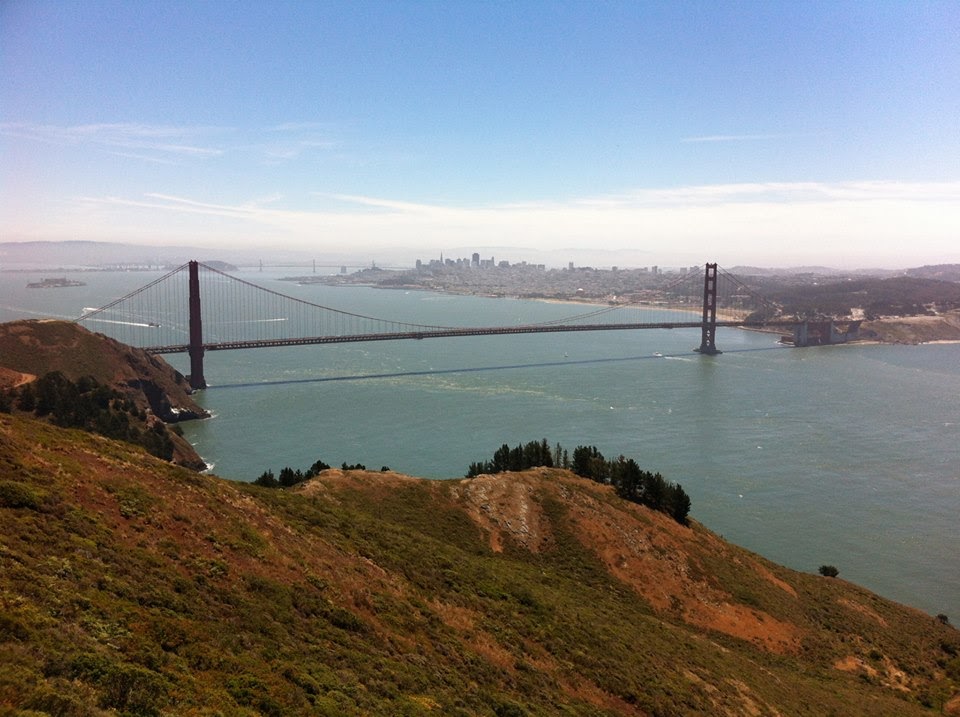
While San Francisco may be one of the more boring forecasts for many meteorologists, for aviation, it was extremely challenging. The reason, at the time, was landing dual vs. single approaches. I heard this has changed. A big part of aviation is airport arrival rate, and everything the FAA Ops does each day revolves around how it affects the arrival rate. So, San Francisco, if I remember right, is around 45+- or so planes in a good landing arrangement, but during low clouds that won't burn off or a bad wind direction, it can drop into the 20s. When this is planned for, the planes can be spaced out through ground delay programs. However, when it is unexpected, suddenly a lot of aircraft are circling.
TLDR: I had to forecast the stratus clearing time at KSFO and on the approach within 15 minutes of the actual clearing time. Being wrong meant delays and angry people.
I also forecasted for Denver for afternoon microburst potential through high-based storms, and in the Winter, fog and snow were the main issues.
O'Hare has so many nuances that to forecast in Chicago, you have to really understand the land-water interface and how lake breezes work, and how cold fronts interact with the lake. Everything from tornadoes to squall lines, fog, blizzards, and heavy freezing rain can occur in that city. Plus, the lake breeze can stall across the airport, making landing into the wind much harder.
This is a little about working in aviation for an airline. I could say much more on that topic in future posts.
If you haven't used it, Haby Hints is a great free resource for understanding the atmosphere.
Good luck on the job search!


Responses